Flacon — Brand Media Platform / Gold Apple / 2024
Helpful articles and expert advice make it easier to choose the right product and shop directly.
DETAILS
OVERVIEW
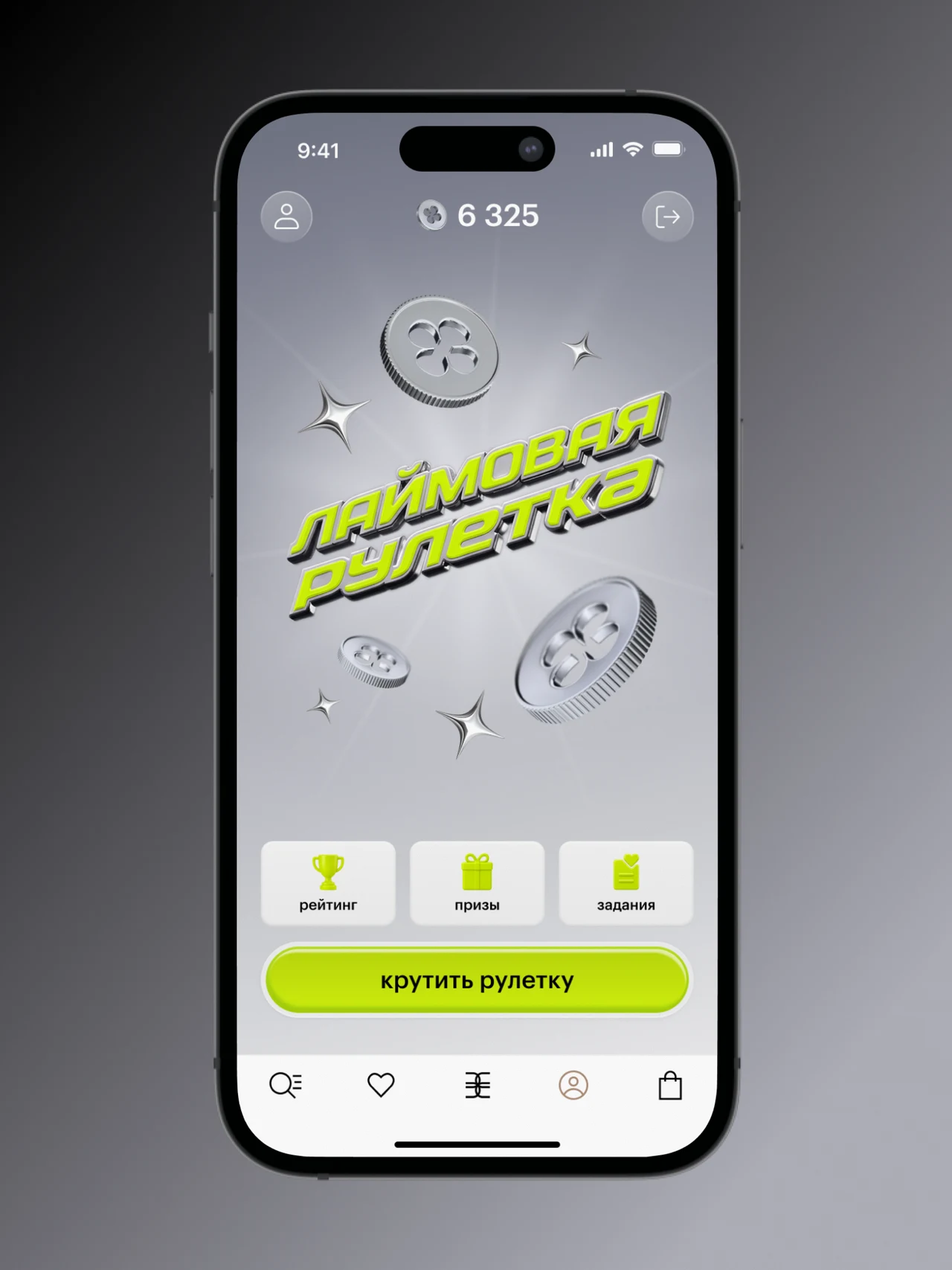
I led the creation of Lime Roulette a gamified feature within Gold Apple’s loyalty program for an app with 10+ million users. My role as Product Lead Designer covered the product vision, design team leadership and implementation quality — from the initial concept to continued product development after launch.
This case study was created specifically for a Russian-speaking audience and has not been translated
CHALLENGE
Gold Apple was developing a new loyalty program called «Lime Club» with its own in-app currency — «Beauties». Users earn them through purchases, promotions and tasks, then exchange them for products, bonuses and promo codes.
The marketing team needed new trade marketing formats and an additional use case for the loyalty currency. The new mechanic had to encourage users to spend their accumulated Beauties, return to the app more often, and discover new reasons to make a purchase.
SOLUTION
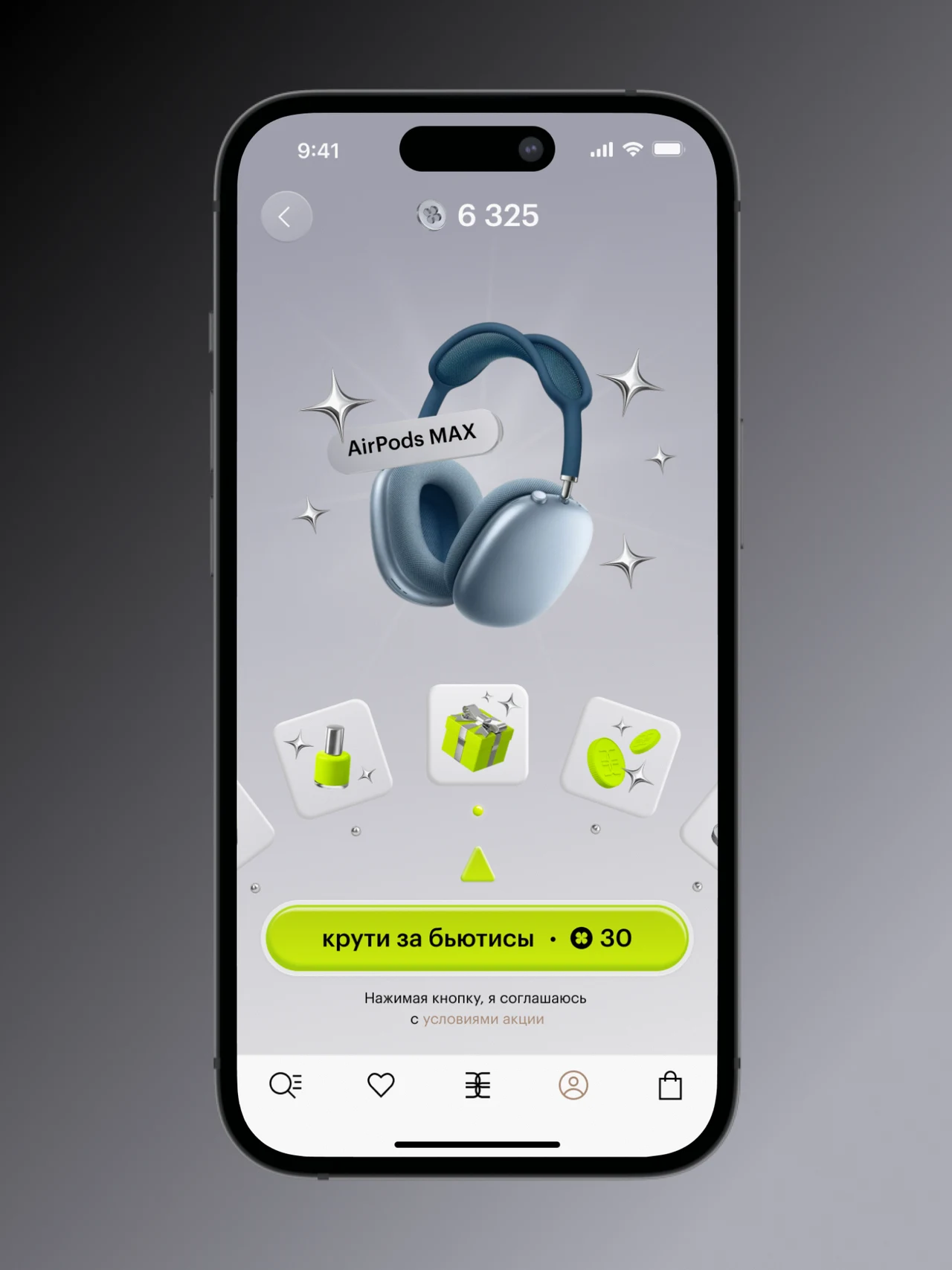
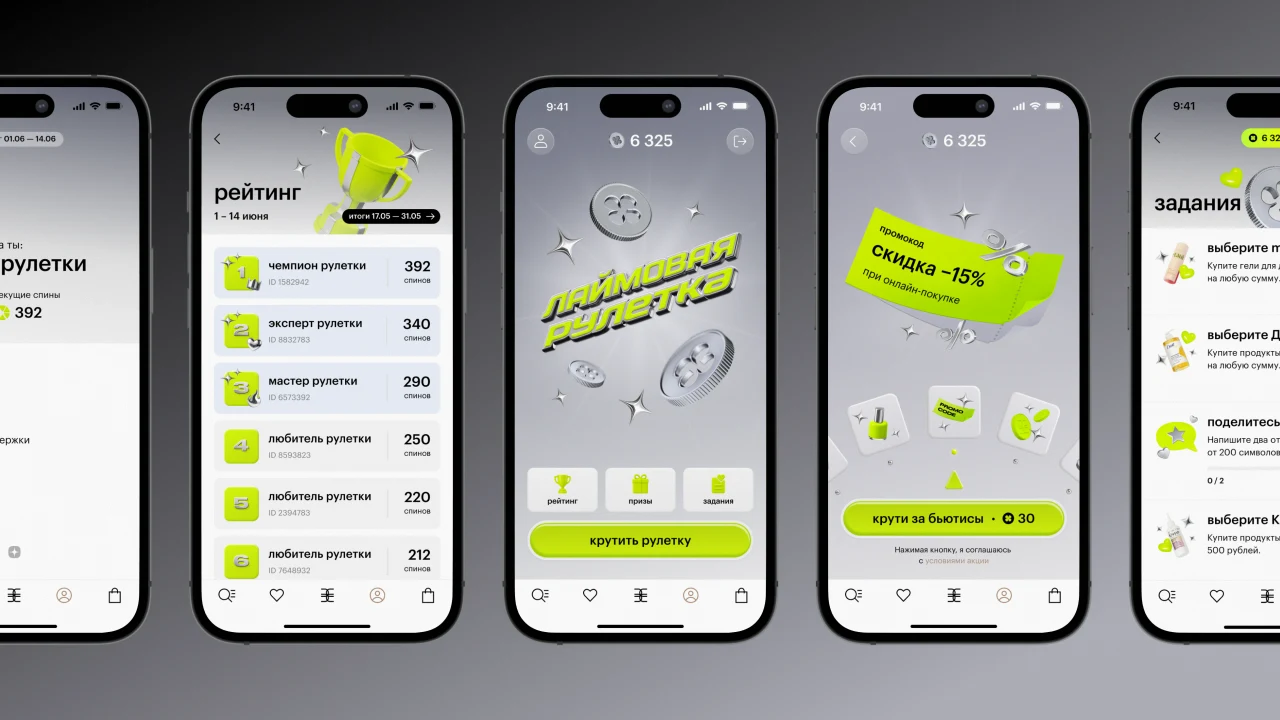
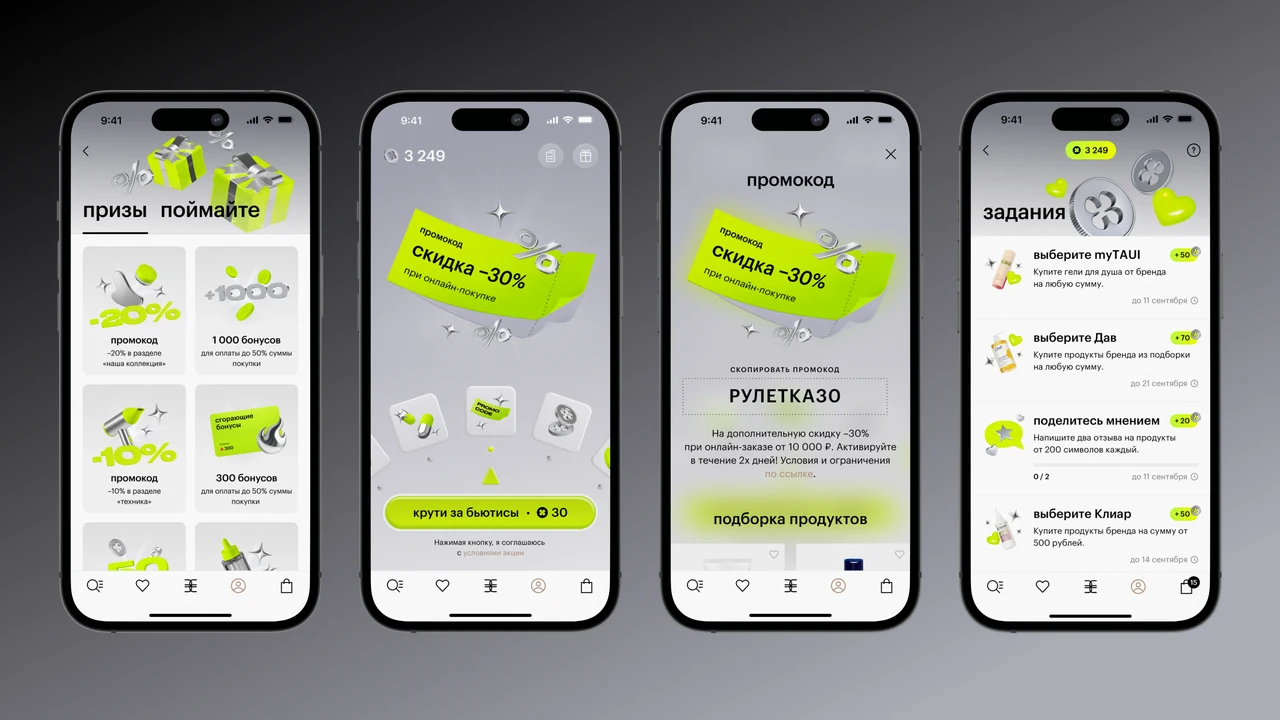
We turned Beauties into a game resource. Users spend them to spin the roulette wheel and receive a random reward: a promo code, regular or expiring bonuses, or additional Beauties.
This gave the in-app currency a new use case that combined saving with an engaging game experience. Promo codes and bonuses then guide users from the game back to the core loyalty and shopping journeys.
From concept to launch
Our early concepts moved away from a purely functional mechanic and made the prize reveal the main emotional moment. We drew inspiration from Asian arcade machines, where complex interactions and expressive animations build anticipation and reinforce the value of the reward.
This approach significantly increased the complexity of implementation. An external team was responsible for development, but it lacked the resources and experience required to build a game with a large number of mechanics and animations. We had to revise the concept and return to a more familiar roulette experience.
The final solution needed to feel intuitive, match the team’s development capabilities, and preserve both the excitement of the game and Gold Apple’s visual language. I established the foundation of the concept, and the team worked under my direction to refine the core states and animations. The project took seven months from the first concepts to launch, and the first version of Lime Roulette went live on December 11, 2025.
From launch to an evolving product
In the first release, we focused on the core gameplay: spinning the wheel and receiving digital rewards—promo codes, bonuses, and beauties. In March 2026, we added physical prizes to make winning more exciting and increase the perceived value of the rewards.
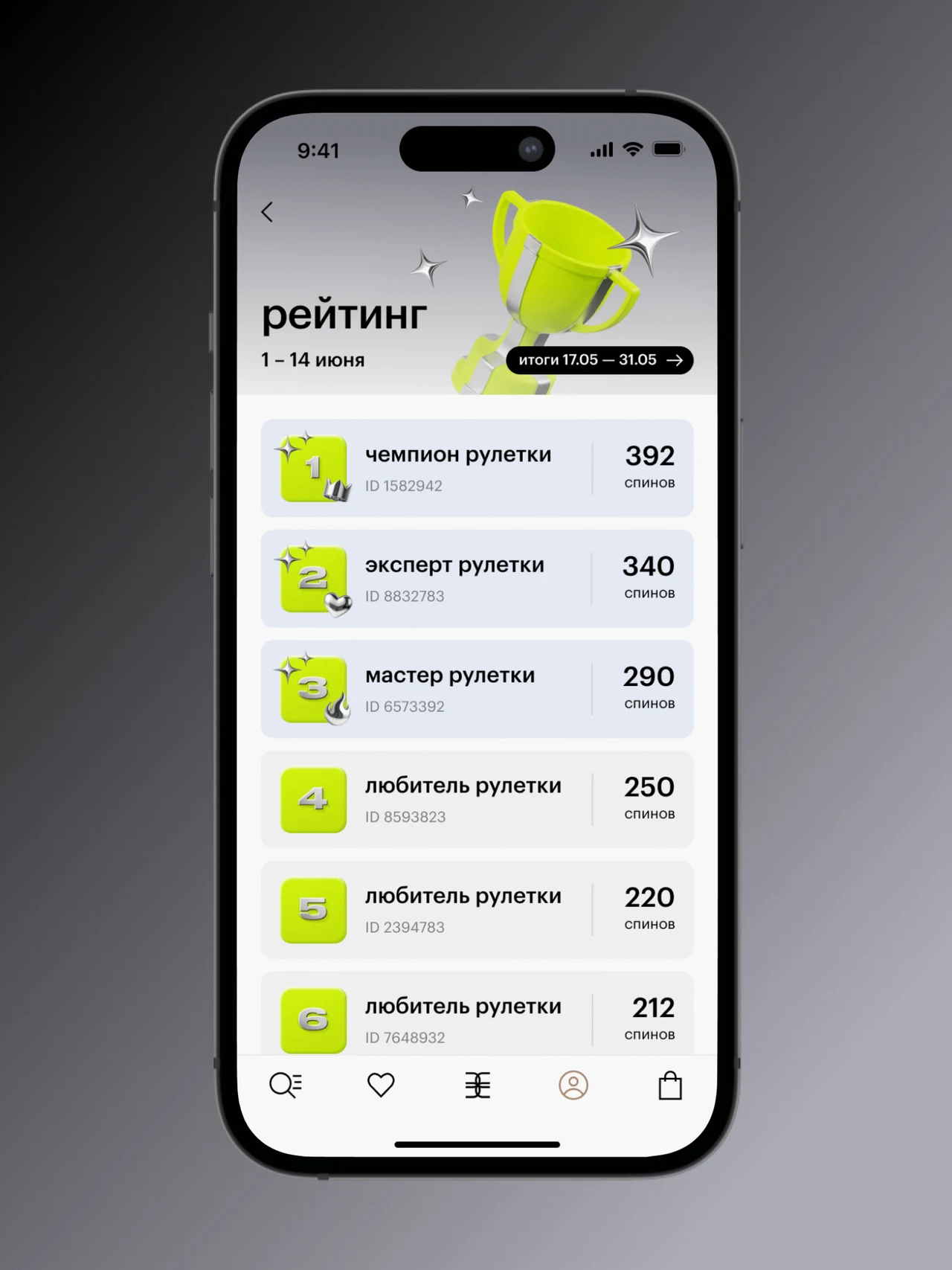
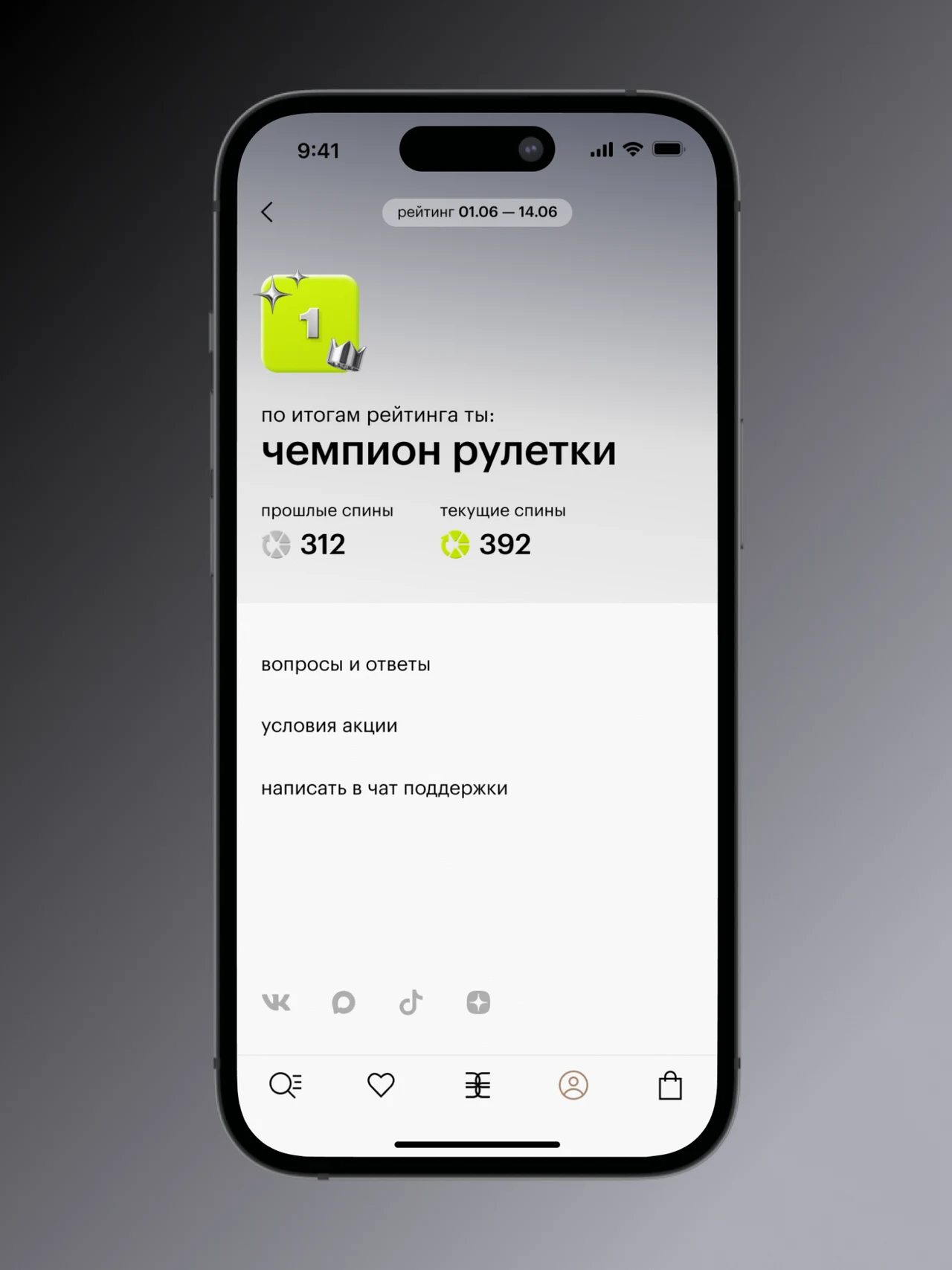
In the next phase, we worked on giving users more reasons to return regularly. The August 2026 update introduced a new menu, user profiles, tasks, and a leaderboard for a two-week competition. If users don’t have enough beauties, they can complete tasks to earn currency for more spins, while the leaderboard makes each spin part of a competition for prizes.
For the business, the leaderboard opened up a new opportunity for trade marketing integrations: prizes now had a dedicated placement format tied to an ongoing competition between users rather than a random win on the wheel. The product began addressing the original marketing challenge through several game formats.
Design leadership and process
The project had no established product design team or dedicated product manager, so my role extended beyond interface design. I assembled and led the design team, ensured consistency across product decisions, and coordinated work between marketing, design, and development.
The external team followed processes that differed from Gold Apple’s: interim reviews and design QA were not built into the development process, so discrepancies between the implementation and the designs often surfaced close to release. I established a process for refining tasks, handing off designs, breaking down animations, conducting interim reviews, and managing revisions, which helped reduce the number of iterations needed before final sign-off and maintain the product’s established quality standards.
Around 60% of my work involved management tasks: strategy, task definition, team coordination, reviews, and presenting design decisions to stakeholders. Another 30% went into developing initial concepts and designing new features. The remaining 10% focused on implementation support, complex user flows, animations, and design QA.
Outcomes
My main contribution was turning the initial game mechanic into an evolving product. I developed the design concept, assembled the team, aligned stakeholder interests, established the implementation process, and continued developing the product after the first release.
I remain responsible for Lime Roulette’s ongoing development, and the next step will be to connect it with other games through a shared currency Beauties, so that the separate mechanics gradually form a unified gaming ecosystem.