Flacon — Brand Media Platform / Gold Apple / 2024
Helpful articles and expert advice make it easier to choose the right product and shop directly.
DETAILS
OVERVIEW
Flacon is a branded media platform within the Gold Apple app, which has over 10 million users. The editorial team works with guest experts to create articles, reviews, rankings, curated selections, and live streams that help users understand different topics and choose the right products.
I joined the project at the MVP stage and was responsible for turning the initial concept into a cohesive product. I developed the final design concept for articles, created a system of editorial formats, planned content distribution and navigation, and designed user journeys from content to products, as well as advertising formats.
These solutions are already live and have been localized for Russia and Kazakhstan. The component system for articles was also adapted for other products within the Gold Apple app.
CHALLENGE
Flacon already had a well-known editorial team and its own audience on its website and social media, but within Gold Apple, it had to make its value clear all over again to e-commerce users who were used to starting with the catalog, search, or a product page.
When I joined the project, the team had already created a minimal architecture and a basic grid, and the art director had developed an initial visual concept, but the design didn’t yet cover all editorial formats, entry points, or ways of interacting with products.
The app’s architecture imposed another important constraint: Flacon content couldn’t be included in global search. Users needed a separate way to find information, and the platform itself had to make its structure clear, show the available topics, and provide enough context before users opened an article.
At the same time, Flacon couldn’t simply blend into the catalog. The editorial team already had its own character, visual language, and content creation process. The publication couldn’t be completely separate from Gold Apple either, because users needed to stay connected to the store after reading and be able to continue their journey toward the right product.
The main challenge was to make Flacon independent enough to be seen as a media platform, yet connected enough to Gold Apple for its content to become part of the shopping journey.
SOLUTION
We began developing Flacon not as another article feed, but as a new user journey—from interest in a topic to choosing a product. Users could come across Flacon in familiar sections of Gold Apple, find content on a topic that interested them, better understand their needs, and move from a recommendation in an article to the right product. For the editorial team, we created a scalable system that allowed them to publish content in different formats without designing every page from scratch.
I was responsible for ensuring that entry points, navigation, articles, product integrations, and commercial user flows worked together as a single product within the Gold Apple ecosystem. This logic defined the three main parts of the solution: content discovery, the editorial platform, and e-commerce integration.
Discovery beyond search
The overall architecture of the Gold Apple app didn’t allow Flacon content to be included in global search. This meant the media platform couldn’t rely on one of the ways users normally found information. We needed to help users find relevant content in the sections of the app they already used every day.
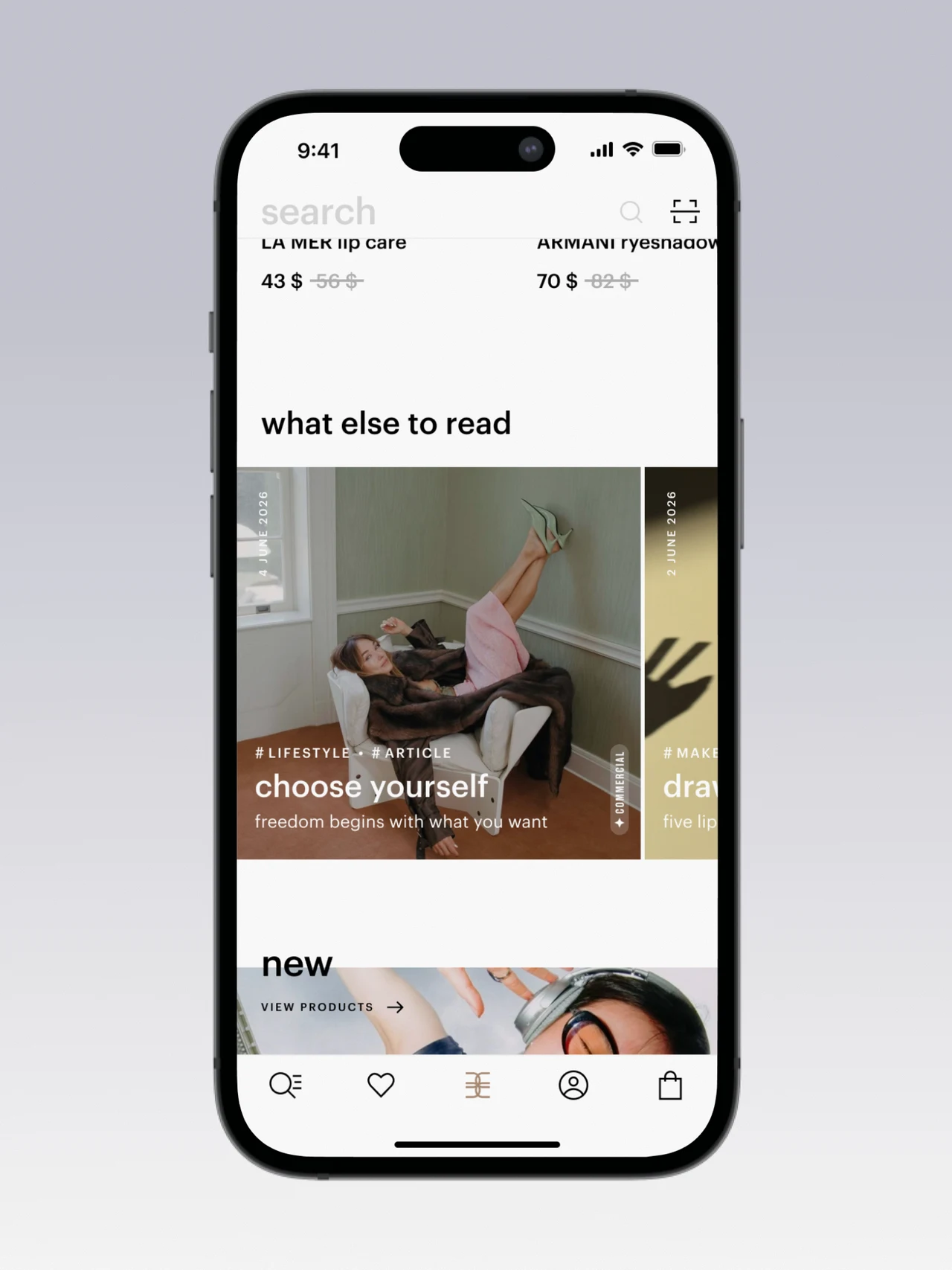
I designed several entry points into Flacon. The home screen gained a “More to Read” article widget, while the existing “Bloggers Recommend” block was reworked to link creator recommendations with editorial content. I also designed a widget for product pages that showed related articles when users needed more information before making a purchase.
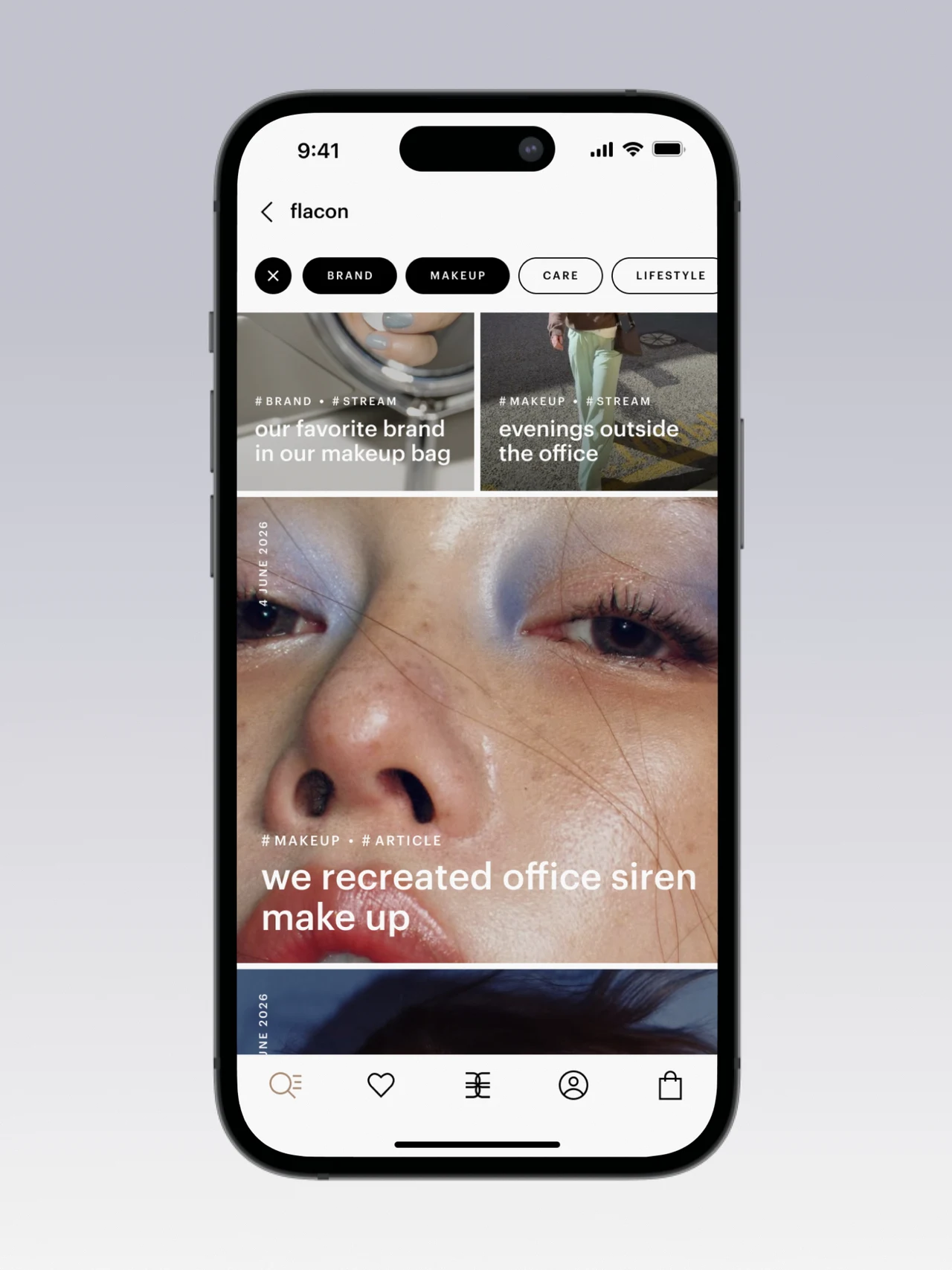
Once users entered Flacon, they needed help finding their way around without a search bar. I designed a filter system that let users select several topics at once and tailor the feed to their interests. Users gradually narrowed the feed down to content that matched their interests instead of entering a specific query.
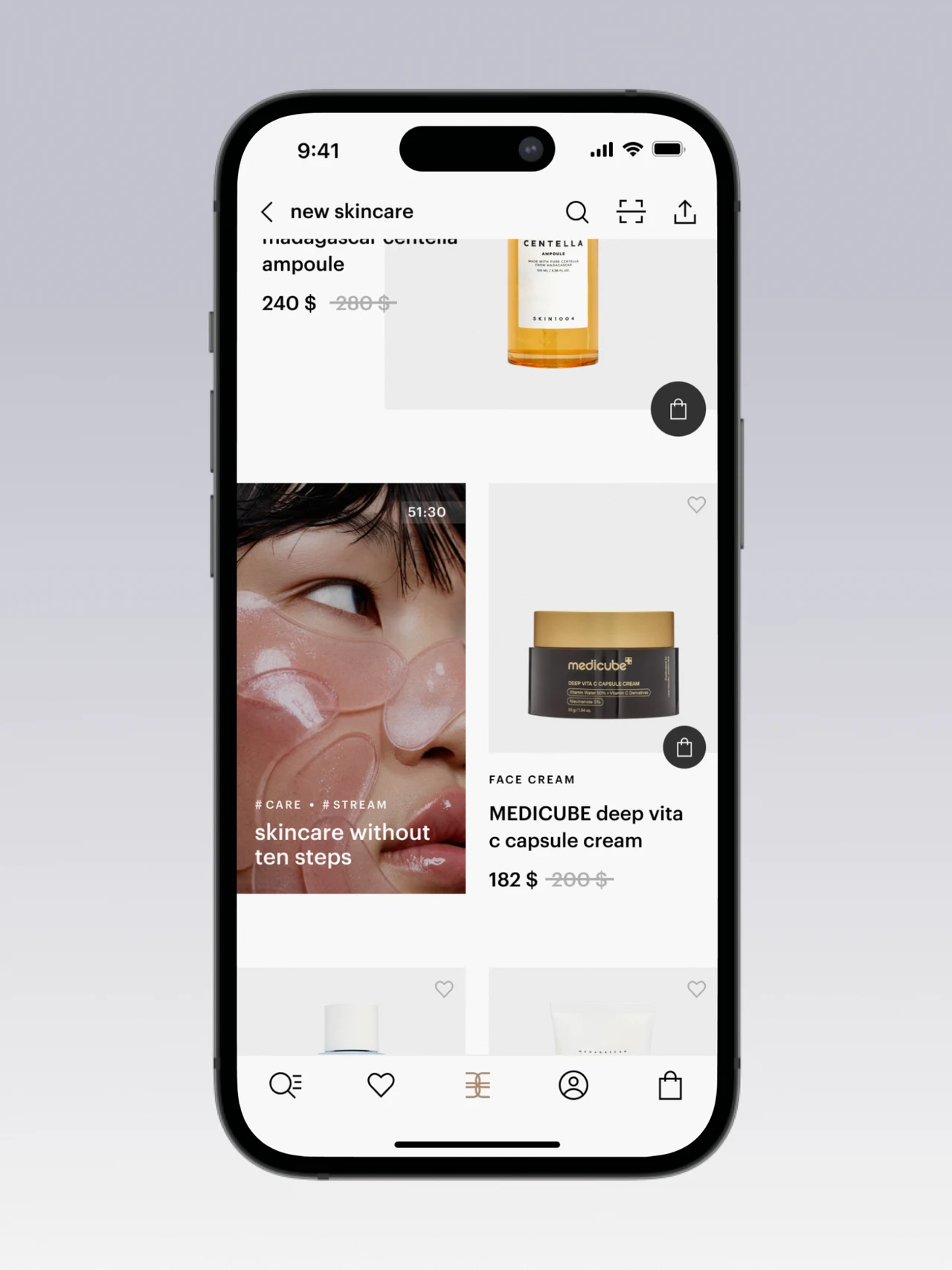
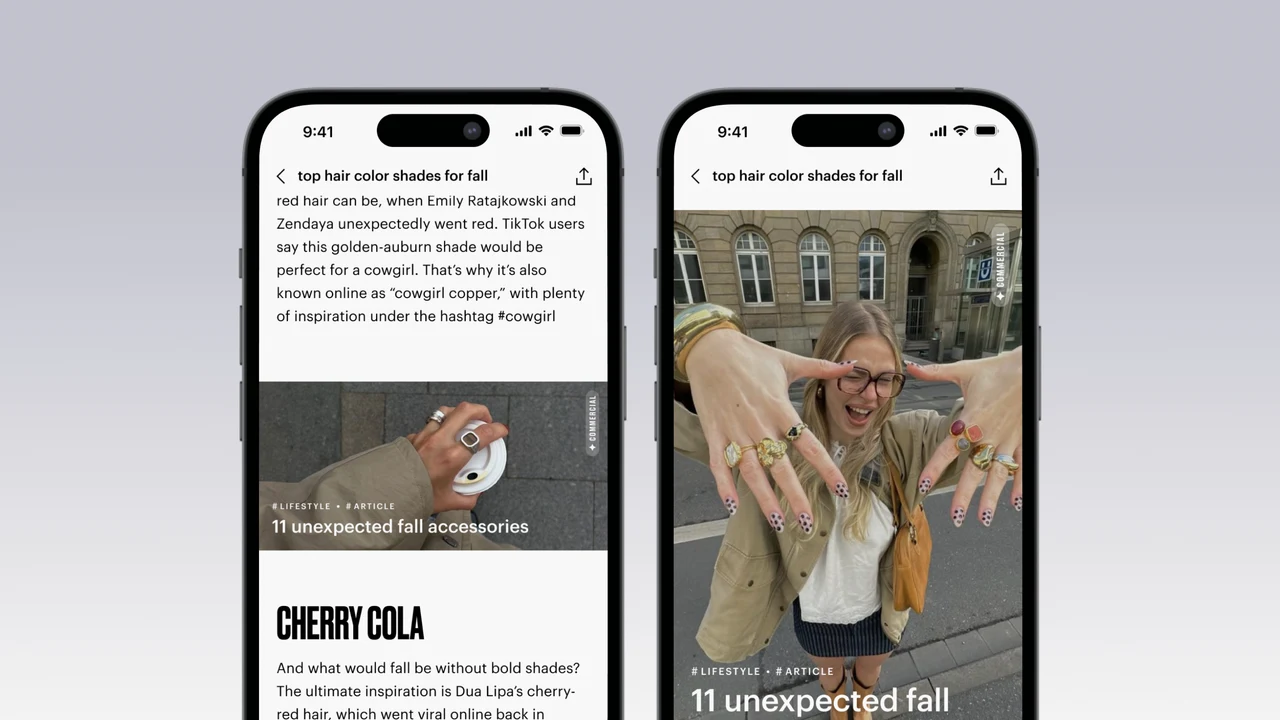
The catalog feed became the most important connection between Flacon and the store. I designed a flow in which products, articles, and live streams appeared alongside each other and were linked by shared tags. Trade marketing placements used the same logic, allowing editorial and commercial content to appear in relevant sections of the catalog.
As a result, Flacon was no longer confined to its own section. Users could come across content on the home screen, in the catalog, alongside a product, or in an article feed tailored to their interests.
One system
The first step is to find an article. Flacon then needed to show the value of the content, help users understand the topic, and retain its editorial character.
When I joined the project, a basic article structure already existed, but the initial concept didn’t cover all content types. Curated selections, rankings, news, live streams, and the dedicated “Makeup Bags” article format served different purposes and couldn’t all work equally well within the original template.
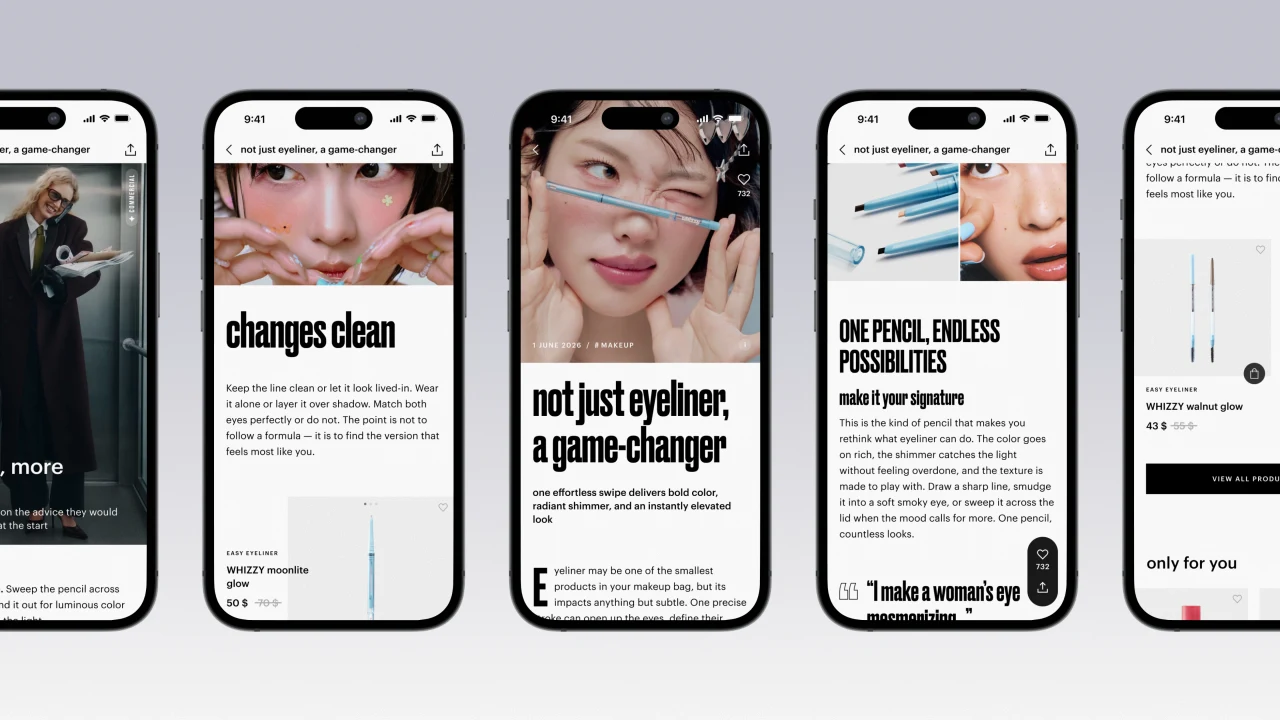
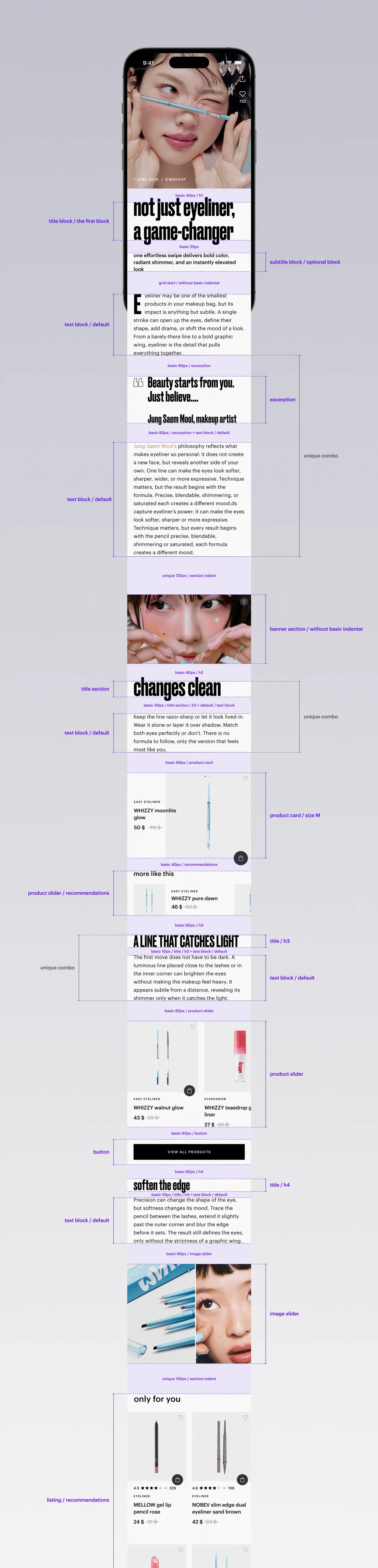
I developed the final design concept for articles and created a shared component system for all editorial formats. Editors could combine components to suit each piece of content: create product selections and rankings, publish short news updates, or build more complex special projects and long-form articles. Each publication retained Flacon’s visual language and consistent interaction patterns.
We worked with the editorial team to define which elements should remain consistent across all articles, which could change, and which formats needed more flexibility. The new system made it possible to create pages without designing them from scratch and gradually evolved alongside new content.
Each article became an interface in its own right, rather than a static sequence of text and images. I also added article reactions, sharing options, related content blocks, and animations for different interface states and user actions to the system. The system included product and advertising components that complemented the article’s content without disrupting the reading flow.
The editorial team gained a flexible tool for working with different publication formats, while users gained a consistent way to interact with content regardless of format.
Content to product
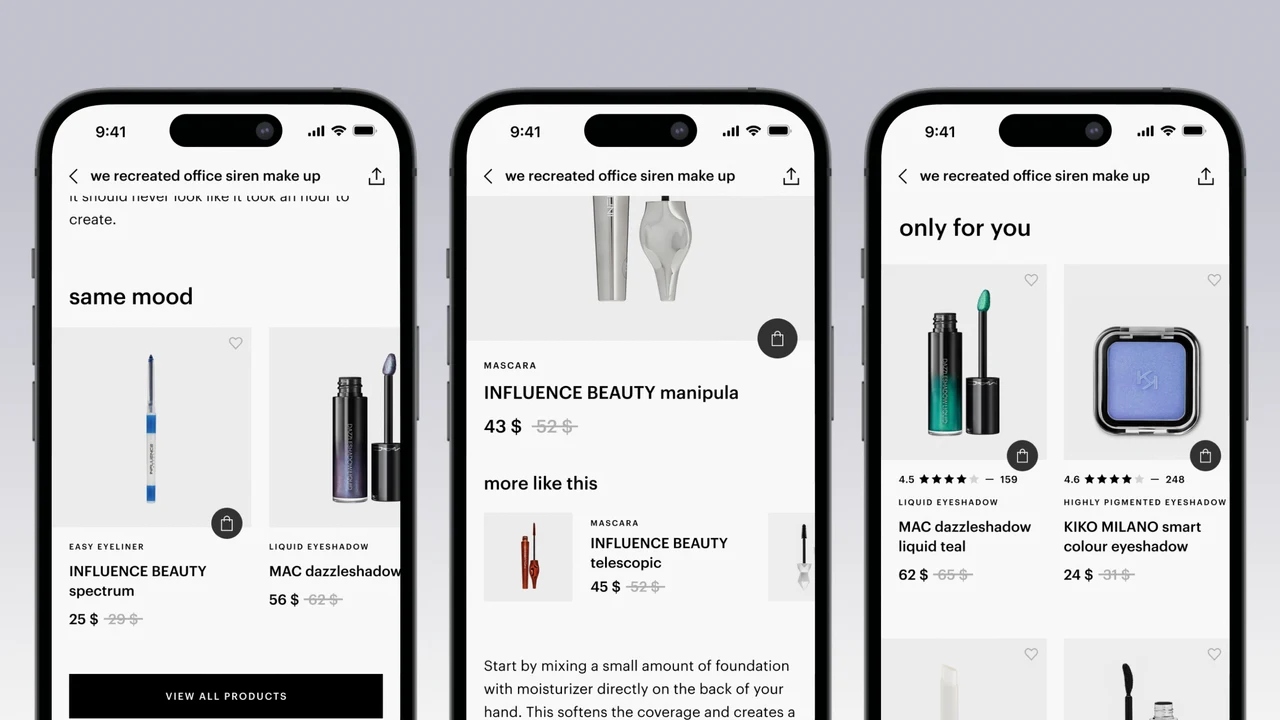
Users needed to be able to go directly from an article to a product without returning to the catalog and searching again. The content helped users understand the topic and identify what mattered when choosing a product, so the transition from reading to product selection needed to preserve that context.
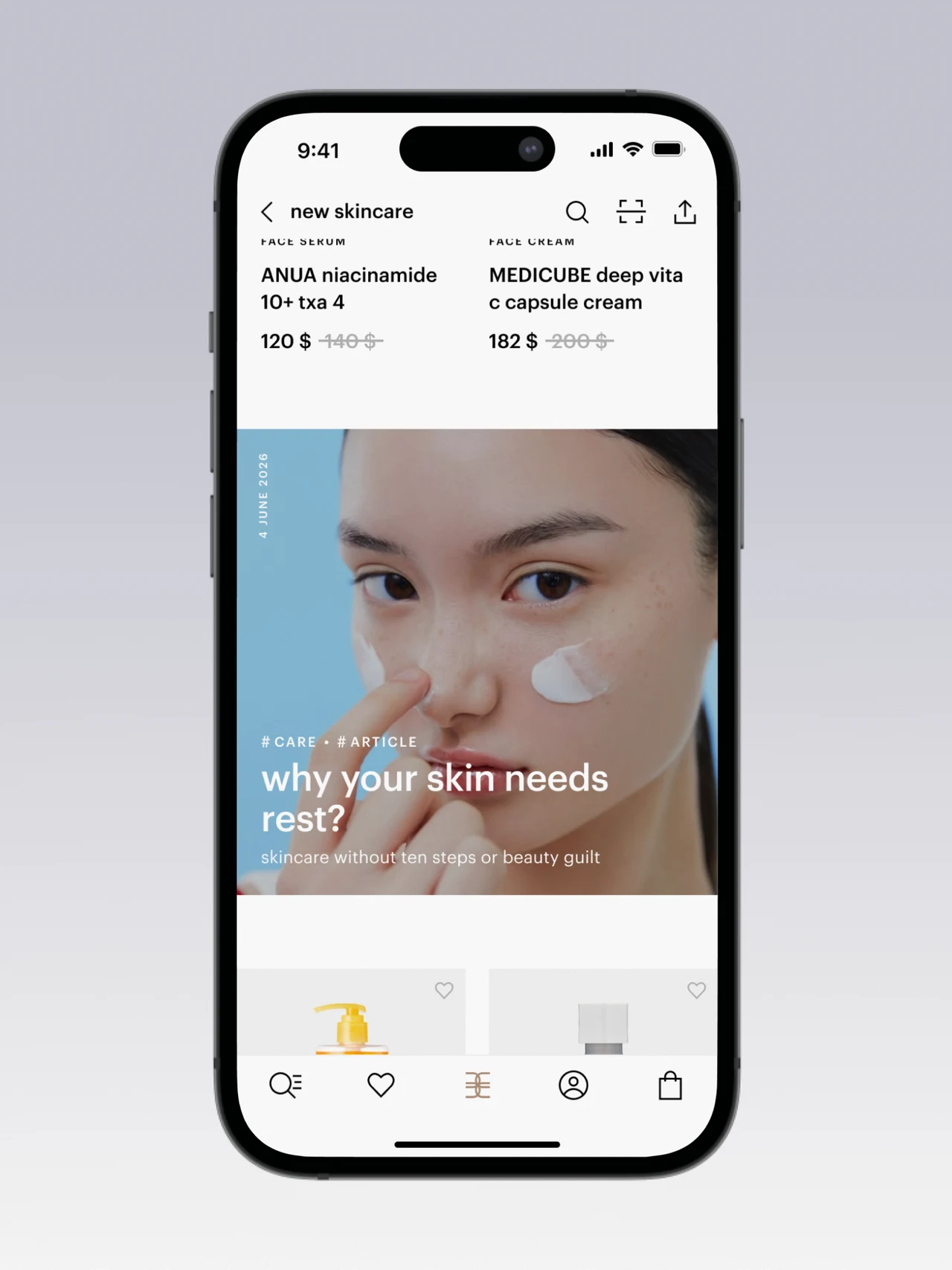
I linked articles to the catalog and added recommendations for similar products below the product cards in articles. Users could move straight from reading to choosing the right product. Content no longer served only to attract attention at the top of the funnel or provide a generic prompt to visit the store. It became a link between users’ needs and the catalog: it explained what to look for, suggested suitable options, and shortened the path to purchase.
Product integrations became Flacon’s main source of revenue. They also showed that editorial content could both help users and support the business’s commercial goals.
Commercial platform
The connection between content and products allowed us to develop both the user journey and a new commercial model. I designed how advertising placements would work within articles, from promoting popular content to offering paid slots that supported brands’ trade marketing goals. Ad blocks used the shared component system and remained relevant to the article’s topic.
The integration of articles and live streams into the catalog feed enabled additional promotional formats. Brands could showcase their products not only within editorial content but also in the catalog, in the context of a relevant category, a specific product, or a user’s interests.
Flacon began creating value for three groups at once. Users gained knowledge and recommendations, brands gained new ways to talk about their products, and Gold Apple saw revenue grow through product and trade marketing integrations.
Going beyond the scope
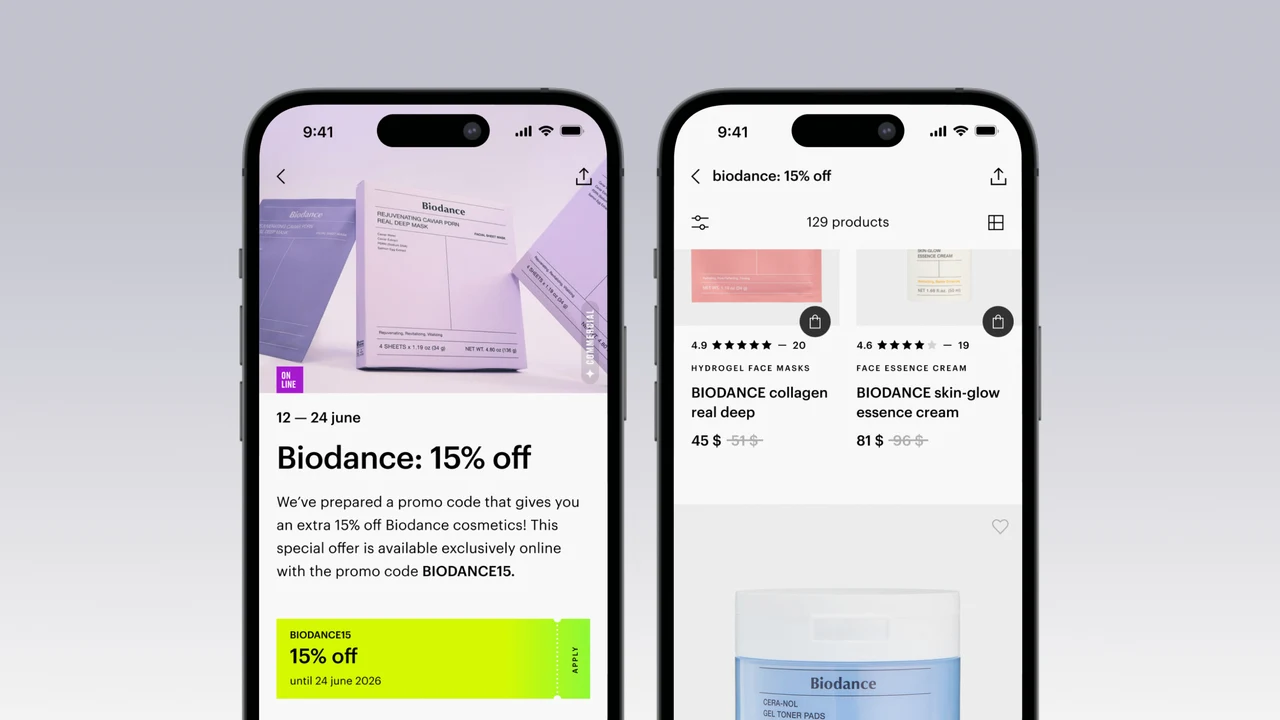
As the product evolved, it became clear that the system could work beyond Flacon. From the start, I designed components so they could be combined and adapted to different types of pages. The system created for editorial content was later used for promotions and documents. The result was a foundation for other content use cases within the app, rather than an isolated set of elements for a single media section.
The next stage involved launching Flacon in Kazakhstan and preparing for a future launch in Belarus. Interface translation alone wasn’t enough. The content needed to be linked to each country’s product catalog, and Flacon’s editorial teams needed tools to create and adapt content collaboratively.
I worked with the team on backend logic and workflows in the admin system. We improved the workflow for collaborating on articles and added the ability to copy content between countries while preserving the text and visuals. Editors could use an existing publication as a starting point, adapt it for a local audience, and link it to products available in that market.
This created a shared product foundation for all countries. Formats, components, and core user journeys remained consistent, while content and product links were adapted to each market. This approach helped us launch Flacon in Kazakhstan faster and prepared the product for a future launch in Belarus, as well as further expansion into other countries.
A long journey
I joined Flacon in April 2024 at the MVP stage. I defined the final product vision and designed the key solutions—from articles and navigation to product integrations, commercial user flows, and localization. I worked directly with the art director and the cross-functional team to align editorial, business, development, and design needs and ensure the product remained cohesive.
Outcomes
Flacon is live in Russia and Kazakhstan, and revenue from product and trade marketing integrations continues to grow each month. I’m most proud that I joined the project to refine the editorial formats and went on to define Flacon’s final product vision—from how users discover content to how that content integrates with e-commerce. All the solutions presented in this case study have been implemented and are running in production.